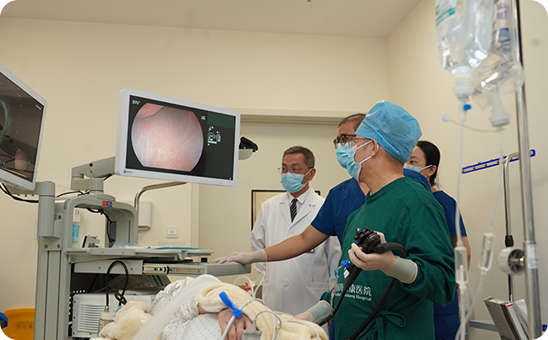
The International Medical Center offers gastroscopy and colonoscopy, including endoscopic treatment, under sedation. Procedures are carried out jointly by senior endoscopists and a dedicated anesthesia team in the International Medical Center's separate, dedicated clinical area, where diagnosis and treatment can be completed in one setting.
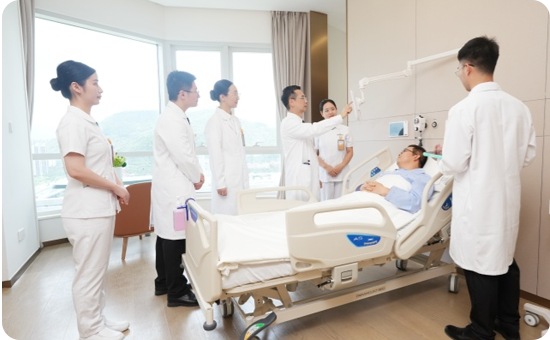
Procedures are performed by a senior endoscopy director with experience in more than 10,000 sedated gastroscopies and colonoscopies, specializing in the screening and minimally invasive treatment of complex gastrointestinal lesions. The team includes Dr. Li Chujun, Chief Physician and Chief Specialist in Digestive Endoscopy (former Director of Digestive Endoscopy, The Sixth Affiliated Hospital, Sun Yat-sen University); Dr. Wang Chen, Chief Physician, Department of Gastroenterology; and Dr. Gao Ruiping, Chief Physician, Anesthesia and Surgery Center. All members of the anesthesia team are full-time anesthesiologists. A pre-procedure anesthesia assessment is carried out and an individualized anesthesia plan is developed, and sedation is administered by an anesthesiologist on a one-to-one basis during the procedure.
The Olympus 290 endoscopy system is used, together with high-definition, magnifying, capsule and therapeutic endoscopes. Magnification of several hundred times allows detailed observation of the fine structure of the gastrointestinal mucosa. If polyps, small ulcers or bleeding points are found during the examination, minimally invasive removal, hemostasis or biopsy can be performed at the same time, so that screening and treatment are completed in a single procedure.
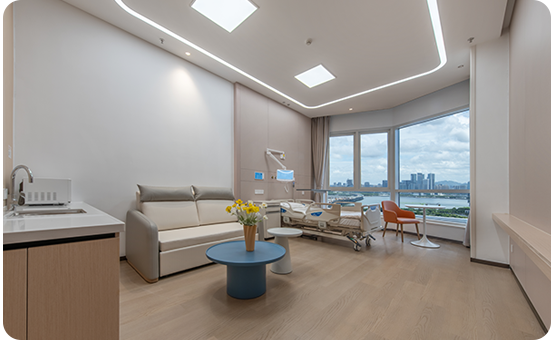
On the day of the procedure, bowel preparation is completed in a private room, and a staff member accompanies and guides the patient throughout, from preparation and monitoring during the procedure to recovery. After waking from sedation, the patient returns to a private room to rest. Patients must not drive themselves home after the procedure.
Elite Package: consultation with a chief physician at the specialist outpatient clinic; procedure performed by a specialist at associate chief physician level or above; Premium Ward (day care). Both packages include anesthesia assessment, bowel preparation medication, a 12-lead electrocardiogram, a 13C urea breath test (Helicobacter pylori), report interpretation by a chief physician, and online support from a dedicated patient concierge. Please contact the International Medical Center for details.
consultation with a chief physician at the specialist outpatient clinic
procedure performed by a specialist at associate chief physician level or above
Premium Ward (day care)
consultation with a chief physician at the International Medical Center outpatient clinic
procedure performed by a specialist of the patient's choice
admission to the International Medical Center Ward with three meals
nurse accompaniment throughout
slides reviewed by the Director of Pathology
and services in English, Cantonese and other languages
40+
with or without symptoms, are advised to undergo regular screening for early gastrointestinal cancer
Symptom
The examination may also be suitable for people with symptoms such as stomach pain, bloating, acid reflux, heartburn, abdominal pain, diarrhea, constipation or blood in the stool.
Reexamine
People with a history of gastrointestinal polyps, gastric ulcers, enteritis or similar conditions who require regular follow-up.
Risk
People with a family history of gastrointestinal tumors, a long-term history of smoking or alcohol use, irregular eating habits, frequent late nights or prolonged sitting.
Privacy
People who place a high priority on comfort and privacy during the examination.
Examination
Adults aged 40 and above, with or without symptoms, are advised to undergo regular screening for early gastrointestinal cancer. The examination may also be suitable for people who wish to check for gastrointestinal problems as part of a health check-up. Whether the examination is appropriate, and the specific plan, will be determined by a physician after assessment.